
Restaurant Staff Scheduling Software: How to Cut Labor Costs Without Cutting Staff
Discover how restaurant staff scheduling software reduces labor costs, prevents overstaffing, and improves employee satisfaction.…
Read More →Discover the top restaurant technology trends in 2026. From AI kitchen management to contactless payments and ghost kitchens, stay ahead with the tech reshaping F&B.
The restaurant industry is in the middle of a technology transformation that would be unrecognizable to operators of even five years ago. AI-powered demand forecasting, autonomous kitchen equipment, contactless ordering ecosystems, and data-driven menu engineering have moved from luxury-tier innovation into the operational toolkit of competitive restaurants of all sizes.
With restaurant labor markets remaining tight and minimum wages rising significantly in major markets, technology that reduces labor dependency or improves labor productivity has become the primary investment priority. Technology that saves 2 labor hours per day generates $15,000–$25,000 annually in labor cost savings at current wage rates.
| Technology | Adoption Stage | Primary Benefit | Typical ROI Timeline |
|---|---|---|---|
| AI demand forecasting | Early majority | Labor + food cost reduction | 3–6 months |
| Self-ordering kiosks | Mainstream (QSR) | Labor savings + upsell | 6–12 months |
| QR/mobile ordering | Mainstream | Table turn + labor | 3–6 months |
| Automated cooking equipment | Early adopters | Consistency + labor | 12–24 months |
| Predictive inventory management | Early majority | Food waste reduction | 3–9 months |
| Restaurant AI chatbots | Growing | Reservations + FAQ | Immediate |
Modern restaurant AI forecasting systems ingest multiple data streams: historical sales by hour and day, weather forecasts, local events calendars, school schedules, and sports schedules. The resulting predictions achieve 90–95% accuracy in optimal conditions, allowing managers to schedule labor to the nearest half-hour rather than relying on gut feel.
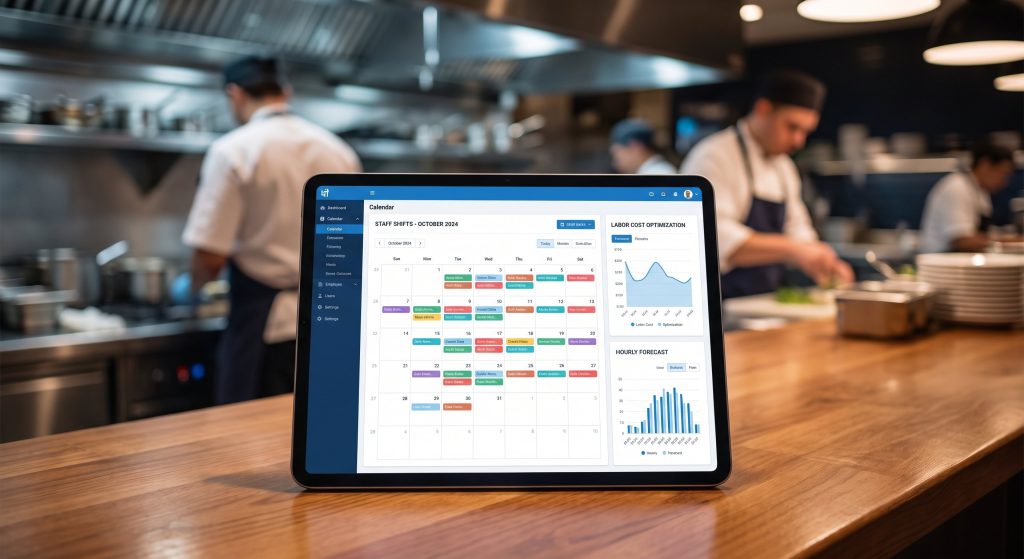
7shifts, HotSchedules (now Fourth), and Restaurant365 are leading labor management platforms with AI forecasting integrated. These tools generate suggested schedules based on forecasted demand and track actual vs. forecasted labor cost in real time.
Self-ordering technology has been proven to increase average check values by 15–30% compared to ordering through human servers, due to visual upselling prompts and elimination of ordering anxiety. Digital ordering interfaces are extraordinarily effective upselling tools.
Established restaurant groups are using virtual brands to monetize underutilized kitchen capacity during off-peak hours, diversify revenue streams, and test new concepts with minimal capital risk. Successful ghost kitchen operations depend on multi-platform delivery management software that aggregates orders from DoorDash, Uber Eats, and Grubhub into a single kitchen display system.
Integrated pay-at-table solutions allow guests to split bills, add gratuity, and pay directly from their own devices. This reduces table turn time by an average of 5–12 minutes per table — a significant revenue impact for high-volume restaurants.
Start with: a modern cloud POS system (Toast, Square, Lightspeed), a QR code menu with online ordering capability, and a reservation management system.
Guest satisfaction with kiosk ordering is generally high when kiosks are well-designed and staff remain available for assistance. Well-implemented kiosk deployments show equal or higher overall satisfaction scores compared to traditional counter service.
For restaurants doing significant volume (100+ covers/day), yes — the labor cost savings typically justify the platform cost ($100–$300/month) within 1–3 months.
Ghost kitchen operators pay for commercial kitchen time plus platform fees to delivery apps (15–30% of each order). Many operators find 20–25% net margins achievable once operational efficiency is dialed in.
Buying technology before defining the problem it should solve. Start with your biggest operational pain points and select technology that specifically addresses those problems.
Restaurant technology in 2026 offers F&B operators unprecedented tools to improve efficiency, reduce costs, and enhance the guest experience simultaneously. Start with the highest-ROI investments, build operational competency with each technology before adding the next, and let data guide your decisions about what to invest in next.

